

Poland’s short-term rental law 2026: what changes for apartment owners in Gdańsk
Poland’s new short-term rental law passed the Sejm (the lower house of parliament) on 8 October 2026. It amends the Act on hotel services: the new rules cover every apartment let to tourists for less than 30 days. The act introduces a central register of accommodation, a duty to show a registration number in every listing, house rules for guests, inspections at the request of neighbours and fines of up to PLN 50,000. From 2028, housing communities and municipalities will gain the right to ban short-term letting. Below we explain what this means for an apartment owner in Gdańsk, what already applies and what to do now. Legal status as of 27 October 2026: the act is waiting for the Senate and the President’s signature, so details may still change.
The new rules in brief: what changes and when
Some obligations already apply, because they come from an EU regulation rather than from the new act. The rest will take effect 14 days after the act is published in the Journal of Laws (Dziennik Ustaw), and the rules on bans only in 2028.
| Obligation or change | From when |
|---|---|
| Entry of the apartment in the municipal register and a number in listings (EU Regulation 2024/1028) | already in force, since 20 May 2026 |
| Central Register of Tourist Accommodation (CWTON), the register number in every listing, fines of up to PLN 50,000, a PLN 40 fee for registration | 14 days after the act is published |
| House rules and updating the entries of apartments that already operate | a few months after the act takes effect |
| Declaration and fire safety opinion for apartments registered before 2029 | by 1 January 2030 |
| Resolutions of housing communities and cooperatives banning short-term letting | from 1 January 2028, then 6 months to stop letting |
| Zones without short-term letting designated by municipalities | resolutions from 1 January 2028, in force at least 6 months after publication |
Where the act stands
It is a government bill prepared by the Ministry of Sport and Tourism (number UC135 in the government’s legislative list). The Sejm passed it on 8 October 2026: 407 deputies voted in favour, 24 against and 9 abstained. Before that, the bill went through the infrastructure committee and the local government committee (report of 17 September 2026, print no. 3119). The Senate will now consider it and may propose amendments, and then it goes to the President. That is why we describe deadlines counted from the day of publication: the exact calendar dates will only be known once the act appears in the Journal of Laws. We will update this article after the Senate vote.
Not everything is waiting for the act. Since 20 May 2026, Regulation (EU) 2024/1028 on data relating to short-term accommodation rental has applied across the EU. Under it, platforms such as Booking.com and Airbnb pass rental data to the authorities, and a listing must carry a registration number. The Polish act adds the national details: who keeps the register, who assigns the number and who fines for its absence.
What already applies in Gdańsk
Every apartment let by the night must be reported to the municipal register before the first guest arrives. In Gdańsk this is done through the city’s website (gdansk.pl/noclegi), in person at the City Hall or through a representative. The register is kept by the Business Register Unit of the Civil Affairs Department, which must make the entry within one month at the latest. Today the entry is free of charge. After registration the apartment receives an identification number, which you show in your listings. The procedure is described on the Gdańsk City Hall website (in Polish), and we cover taxes and the local tourist tax in short-term rental in Gdańsk: taxes and legality.
The CWTON register and a number in every listing
The act creates the Central Register of Tourist Accommodation (Centralny Wykaz Turystycznych Obiektów Noclegowych, CWTON). It is kept by the minister responsible for tourism, and the register is public and published online. The data come from municipalities: the head of the municipality or the city mayor, in Gdańsk the city mayor, from the same register to which you report your apartment today. Each apartment receives an identification number in the register.
This number must be given to the platform before you publish a listing there, and it must be visible in the listing. A listing without the number is a separate violation, punishable by a fine of up to PLN 50,000. The number also goes into the apartment’s house rules. For an entry in the register, the act introduces a stamp duty of PLN 40, and the same amount for changing an entry.
The act applies to services lasting less than 30 days for a single guest. Lets of a month or longer are not covered by these rules.

House rules, fire safety and inspections
Registering an apartment also requires draft house rules. According to the bill, the house rules must be displayed in a visible place in the apartment and include, among other things, check-in and check-out times, quiet hours, the register number and the name and telephone number of a contact person. Apartments that already operate will get a few months to submit their house rules. The second document is a declaration of compliance with the requirements, together with an opinion from a person qualified in fire protection: apartments registered before 2029 submit them by 1 January 2030 at the latest, and those registered after 1 January 2029 at the time of registration.
The act simplifies fire safety requirements for smaller properties: they are deemed to be met when services are provided in no more than 6 units and no more than 30 beds, in a building up to 25 metres high, provided the other conditions are met. Until 1 January 2030, these limits do not apply to properties with smoke detectors or a fire alarm system and fire extinguishers.
Inspections at the request of the neighbourhood are new. They can be requested by people living in the same or a neighbouring building, by the housing community and by the cooperative. An inspection covers technical and fire safety requirements as well as public safety and order. If the owner refuses entry, the registration is suspended until the inspection takes place. If, within 6 months of the first violation found, inspections find three violations of safety or public order in total, the apartment is removed from the register and can only be registered again after one year.
Fines of up to PLN 50,000: for what and who imposes them
The act provides for administrative fines of up to PLN 50,000 for three things: letting without a register entry or after the entry has been suspended, describing the apartment in a way that misleads guests about the type or category of the property, and a listing without the register number. The fine is imposed by decision of the voivodeship marshal (the regional authority), for apartments at the request of the head of the municipality or the city mayor. The decision can be appealed to the local government appeals board.
Platforms also face fines: up to PLN 50,000 for each breach of their obligations under the EU regulation. A platform first receives a notice and 7 days to put things right. Portals therefore have a reason not to accept listings without a number.
Housing communities and cooperatives: bans from 2028
From 1 January 2028, the owners in a housing community will be able to adopt a resolution banning short-term letting in their building. The act adds such a resolution to the decisions that go beyond ordinary management under the Act on the ownership of premises. In a housing cooperative, the resolution is adopted by the general meeting with a majority of more than 50% of those entitled to vote. After the resolution, the landlord has 6 months to stop letting.
Until then, the act gives housing communities no such tool. It is nonetheless a good moment to find out how your neighbours feel. In buildings where short-term apartments are run properly, with quiet hours, cleaning after every stay and a single contact number, a majority for a ban is hard to find.
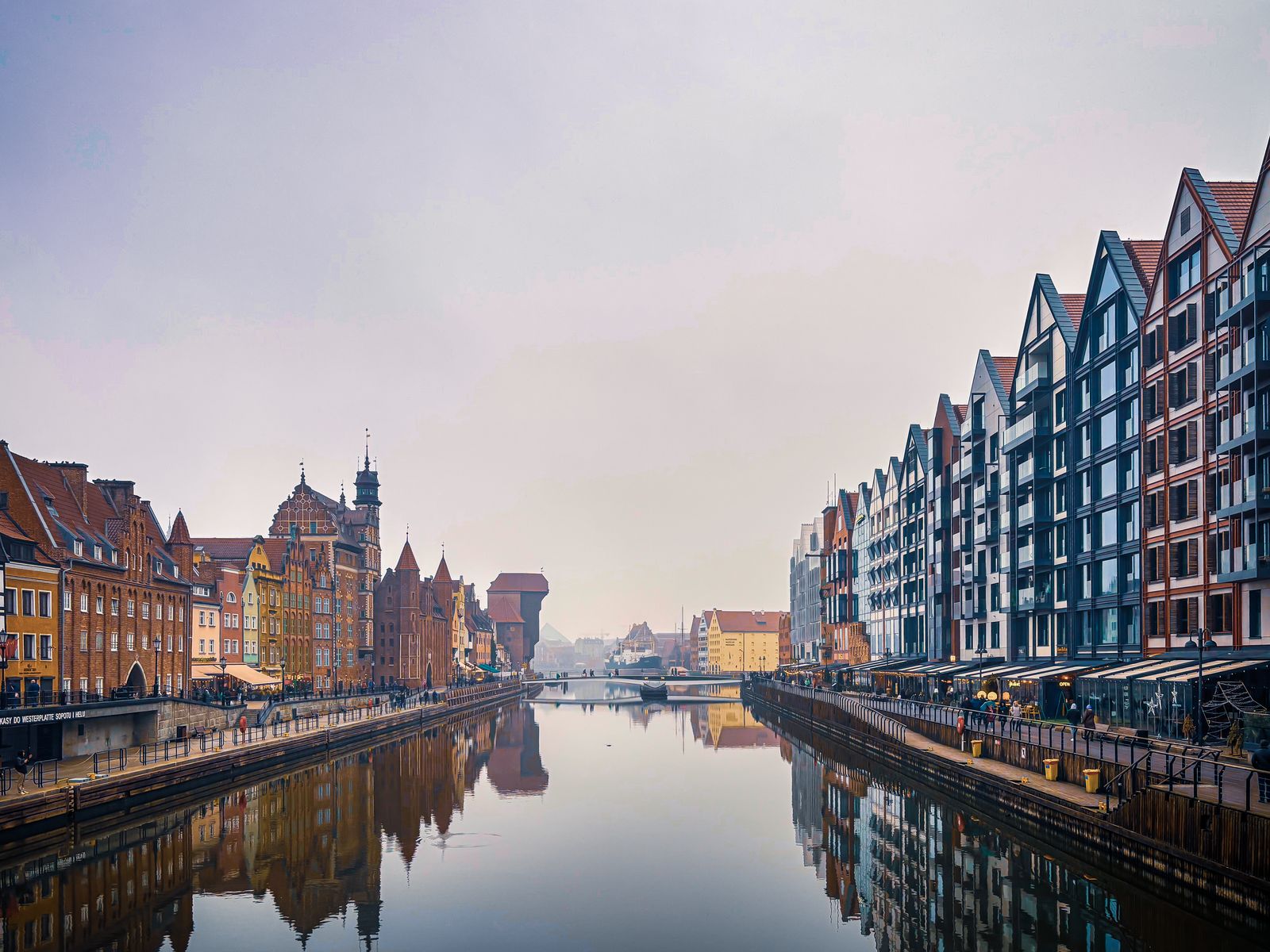
Zones without short-term letting in municipalities
From 1 January 2028, a municipal council, at the request of the head of the municipality or the city mayor, will be able to designate a zone where short-term letting of apartments is excluded, for example because of the historic character of the area or for reasons of public safety and order. The resolution may provide for exceptions for certain entities, properties or periods of the year. The draft resolution must be consulted for at least 21 days, the council adopts it within 60 days of receiving the draft, and it takes effect no earlier than 6 months after publication. This means the first zones in Poland will start operating in the second half of 2028 at the earliest.
The legal basis for zones only takes effect in 2028, so today there is no such zone in Gdańsk. Owners of apartments in the Śródmieście district should follow the city council’s work and take this possibility into account when buying an apartment to let.
What it means when an operator runs the apartment
The obligations under the act rest on whoever provides the service to guests. In the model where the operator rents the apartment from the owner and concludes contracts with guests itself, that is the operator. This is how we work at Apartmore: the register entry, the house rules, the number in listings and handling inspections are on our side. How the cooperation works, from signing the contract to the first transfer, is described in how a short-term rental operator works.
Two things remain on the owner’s side regardless of the model. The first is the building: a housing community resolution from 2028 applies to the apartment, not to the operator, so relations with neighbours matter. The second is the choice of apartment: if you are buying a flat to let, check the housing community’s rules and whether a zone could be created in the area. Whether letting through an operator still pays off under these changes, we calculated in should you hand your apartment to an operator.
What to do now: five steps
First, check that your apartment is entered in the Gdańsk register and that the number appears in all listings. This already applies today. Second, prepare house rules with the number, quiet hours and a contact telephone number, because they will be needed by the municipality once the act takes effect. Third, check the smoke detectors and fire extinguisher and plan a fire safety opinion before 2030. Fourth, talk to the housing community’s board and your neighbours before the option of a resolution arrives in 2028. Fifth, follow the Senate vote and the President’s signature: once the act is published we will know the exact dates, and this article will add them.
If your apartment is in central Gdańsk and you want to hand the formalities to someone who deals with them every day, see how short-term rental management in Gdańsk works. The valuation is free and non-binding.
Frequently asked questions
Is Poland’s short-term rental law already in force?
Can a housing community ban short-term letting?
What is the fine for not registering an apartment?
How much does registration cost?
Do I have to register the apartment if an operator runs it?
Will Gdańsk introduce zones without short-term rentals?
Does the act apply to lets of a month or longer?
Do you own an apartment?
We'll make it pay for you.
Higher rates with no effort on your part. Full occupancy in summer, steady income in winter. Your apartment works, guests are looked after, the 2 a.m. phone call goes to us, not to you. You leave us the keys, and you can finally sleep soundly. Renting you only think about once a month, when you see another payment landing in your account.